
There was a time when job-hopping signaled ambition in motion. Today, a different pattern is emerging. People are staying put.
Across industries, professionals are holding onto roles that are comfortable, well compensated, and on the surface, secure. Companies are reinforcing this behavior with stronger retention strategies such as better salaries, enhanced benefits, and clearer internal career paths.
On paper, it looks like progress. But, beneath that stability lies a more complex question. What happens to innovation when talent stops moving?
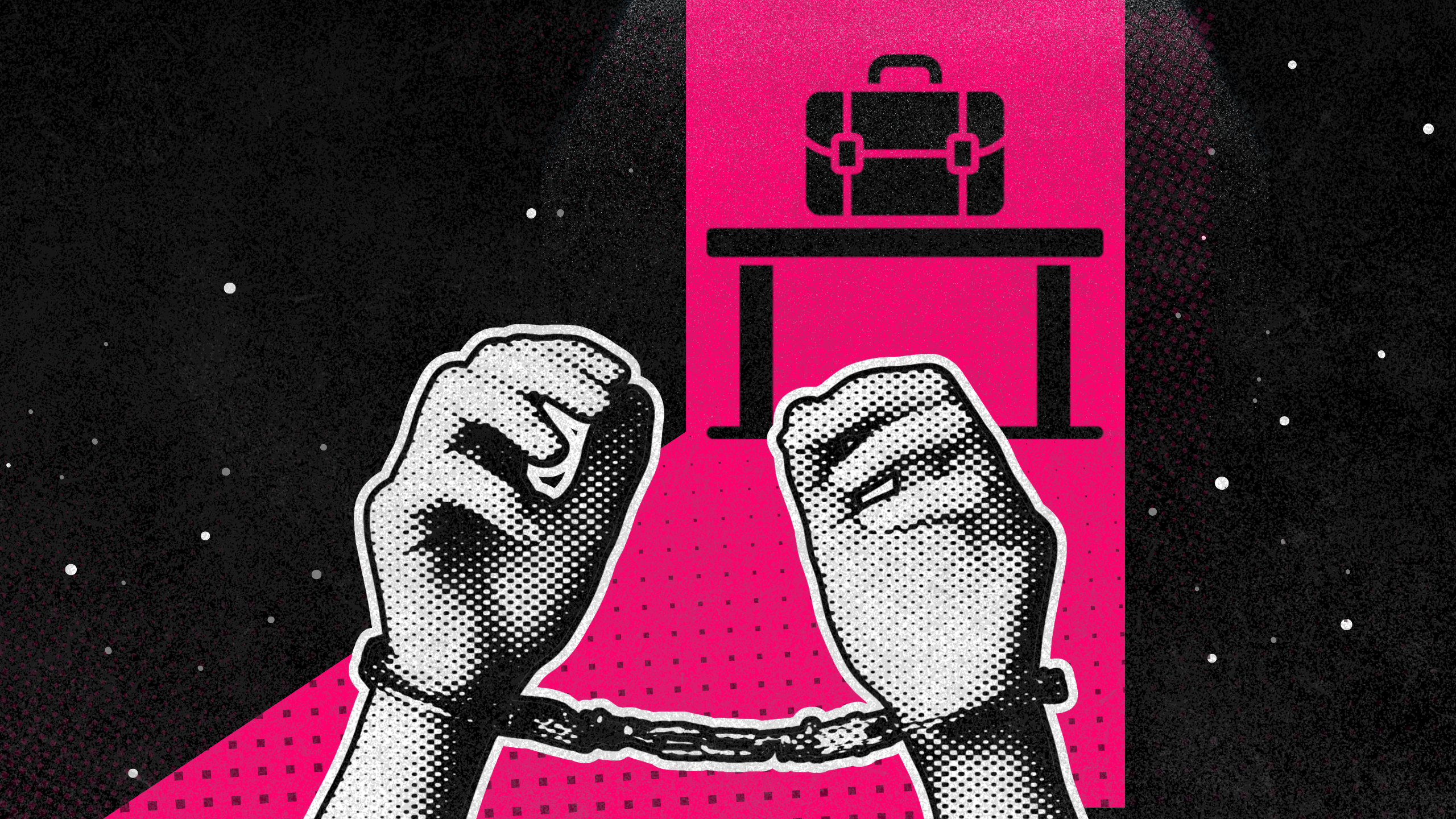
Some call it loyalty. Others call it caution. Increasingly, it resembles a new kind of handcuff.
“Job Hugging” describes the growing tendency of professionals to remain in roles longer than they historically would. It’s driven by a convergence of forces:
- Economic uncertainty discouraging risk
- Compensation packages that are harder to walk away from
- Remote and hybrid work reducing daily friction
- Internal mobility programs that simulate change without real exposure
From a company perspective, this is a win. But zoom out, and the system starts to look stati Innovation rarely happens in isolation. It happens through collisions.
New hires don’t just fill roles, they bring:
- Fresh frameworks from other industries
- Different cultural and operational norms
- Contrarian thinking that challenges legacy assumptions
When talent flows across companies, industries, and geographies, ideas move with them. That cross-pollination is what keeps organizations, and entire sectors evolving.
When that movement slows down:
- Teams become more aligned but also more homogeneous
- Processes become more efficient but also more rigid
- Institutional knowledge deepens but external perspective shrinks
Companies risk becoming highly optimized for the wrong future. At an individual level, staying put can feel like progress especially when promotions and raises continue. But, progression is not the same as evolution.
Over time, professionals who “hug” their roles risk:
- Deep expertise in a narrow scope, but limited breadth
- Reduced visibility in the external market
- Lower adaptability to new environments and ambiguity
Ironically, the stability that feels safe today can quietly erode long-term competitiveness. For employers, the risk is more subtle, but just as real. A workforce that is loyal, but not future ready.
When fewer people leave, external talent inflow slows down, internal promotions bottleneck and early-career mobility becomes constrained. This creates a closed loop in where senior roles stay occupied longer, mid-level talent waits longer and, junior talent disengages faster
Eventually, organizations don’t lose people because they want to leave. They leave because they have to. For Gen Z entering this landscape, the rules are increasingly unclear.
They’ve been told to stay long enough in a company to show commitment but move enough in the industry to show one’s ambition. But in a slower-moving market, the real question becomes: How do you stay relevant if you stay put?
The answer isn’t necessarily to leave. It’s to create real mobility from within.
For high-potential talent, especially in structured environments like FMCG and consulting, relevance is defined less by tenure, and more by trajectory.
- Build internal moves that actually stretch you. Not all mobility is equal. Prioritize roles that expand scope, expose you to new markets, or force you to learn new systems not just repeat old ones with a different title.
- Operate at the edge of your role. Growth happens at the boundaries. Step into cross-functional initiatives, transformation projects, and new market launches. Experiences that replicate the learning curve of a new job.
- Stay externally calibrated. Even if you’re not looking, stay informed. Speak to recruiters, track market benchmarks, and understand how your role compares externally. Relevance is a moving target.
- Learn beyond your job description. Future-proof professionals build horizontal capabilities across digital, data, and AI, while developing leadership and commercial awareness early.
In a static environment, growth becomes self-directed. For firms like NEO Search Partners and the clients they advise the implications are clear. The challenge is no longer just finding talent. It’s unlocking it.
In a world of job hugging:
- The best candidates are less visible
- Passive talent becomes harder to activate
- Traditional outreach loses effectiveness
Winning talent now requires:
- Compelling narratives around growth and impact
- Precision in identifying “ready-to-move” inflection points
- A deep understanding of what makes someone leave something good for something better.
Because the reality is people aren’t staying because everything is perfect. They’re staying because leaving feels riskier.
So, is stability the problem? Not entirely.
Stability builds depth. It enables long-term thinking. It allows strategies to compound and grow within a company. But, without movement, stability turns into stagnation. The goal isn’t constant change. It’s steady, healthy movement. Industries don’t evolve in isolation. They evolve when people, ideas, and perspectives move.
As we move deeper into 2026, are we creating environments where people can truly grow without leaving or simply giving them reasons not to?
Because when nobody moves, it’s not just hiring that slows down. It’s progress.
REFERENCES
- https://finance.yahoo.com/news/job-hugging-newest-career-trend-191500070.html
- https://www.forbes.com/sites/bryanrobinson/2025/10/25/job-hugging-75-of-workers-staying-put-through-2027-study-shows/
- https://www.hrmorning.com/articles/job-hugging-affects-workplace/
- https://www.wtwco.com/en-ch/insights/2025/09/are-job-hugging-and-the-great-stay-good-or-bad-for-business
- https://www.workplacefairness.org/blog_of_the_week/the-power-of-experience-why-older-workers-are-essential-to-a-thriving-workplace/
- https://www.business.com/articles/how-employees-make-or-break-business-success-and-how-you-can-lead-the-way/